1. Blog
  2. Article

Amrisha Prashar
on 4 February 2016
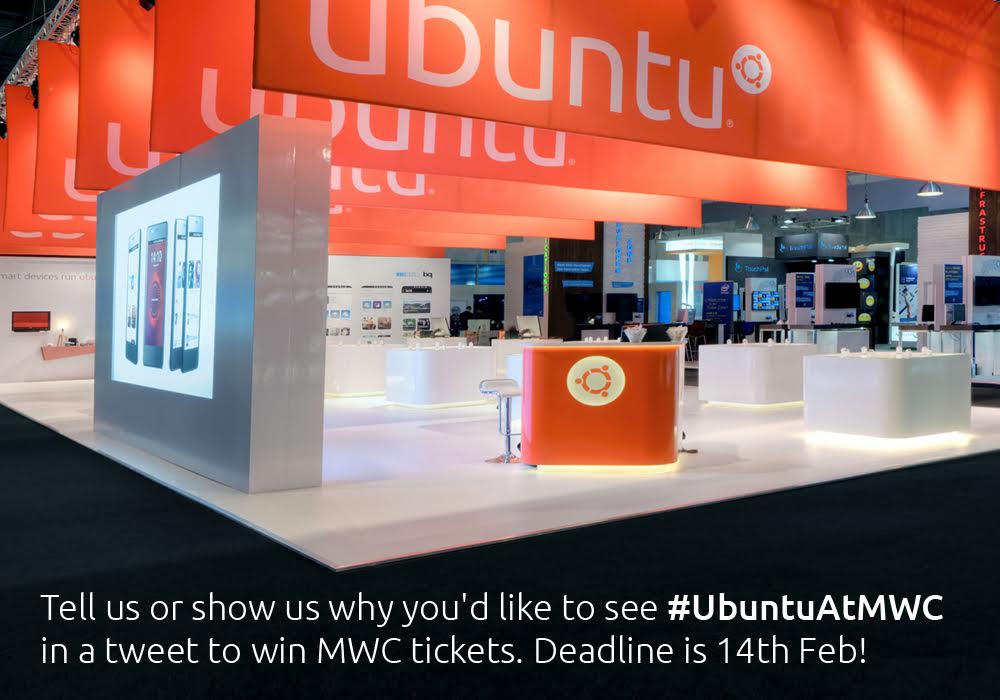
#UbuntuAtMWC Competition


We’re really excited about MWC this year and can’t wait to showcase the various demos across Cloud and Devices!

For those of you not going we’d love to offer you the chance to come and join us and see what we have on display – as our presence is even bigger and better than last year.

To win tickets to MWC we’d like you to tell us or show us why you want to see Ubuntu at MWC in a tweet! Feel free to be as creative as possible with text, images, GIFs or even videos and add the hashtag #UbuntuAtMWC so we can track your awesome entries. The competition starts on 4th Feb (17:00 GMT) and finishes just before the stroke of midnight on Valentines day – 14th Feb (23:55 GMT.) Our creative team will judge the entries based on originality and select three winners where we’ll contact you via Twitter.

Happy creating and we can’t wait for your entries!
Terms and Conditions #UbuntuAtMWC

Related posts


Kola Ojoodide
26 June 2026

Challenges designers face in open source (and how to fix them)

Design open source

Open source powers up to 90% of modern software, yet many projects lack usability. Canonical’s Design team surveyed 115 cross-functional professionals to uncover the 4 core challenges UI/UX designers face when contributing, and how maintainers can solve them. ...


Alberto Carretero
25 June 2026

Hunting a 16-year-old SQLite bug with TLA+: is dqlite affected?

DevOps Article

This article was written by Marco Manino and Alberto Carretero, dqlite team at Canonical. 1. Anatomy of a SQLite bug Recently SQLite published a new version with a fix to a long-standing bug in the way that the Write Ahead Log (WAL) is checkpointed that leads to the corruption of the database. The important aspect ...


Bertrand Boisseau
24 June 2026

Anbox Cloud on C4A metal: Android, at scale, without friction

Ubuntu Article

Why C4A metal is a great place to run Android and why Anbox Cloud makes that practical. If you’ve spent even a small portion of time working with Android development at scale, you’ve likely encountered some pinch points. The platform was built for Arm-based devices, mobile physical hardware, and tightly controlled system environments. Clo ...